Many students get complacent at the start of Year 12 and rapidly fall behind. Year 12 success is crucial for overall A Level Maths success. This is a small weekly Edexcel group, with no more than five students, taught live by me, a qualified secondary maths teacher, for Year 12s (Lower Sixth) who want a strong start to A Level maths.
Tuesdays 6 to 7pm Live Online Lesson · Edexcel A Level Maths · Maximum 5 Students · Half-Term Blocks, England Term Time
Lessons run on Pencil Spaces, a shared digital classroom rather than just a video call.
This group is for students who enjoyed maths at GCSE, considered themselves good at it, and chose it for A Level. It is for you if:
Grade 6 students, honestly. A 6 makes A Level maths really quite difficult. Your child can still join, but only after a conversation with me first, and only if they are prepared to work really hard to close the gap. I would rather say this now than have an awkward conversation later down the line. If you want some advice on whether your Grade 6 child should even be doing A Level Maths, then please get in touch and I'm happy to advise you.
And who it is not for. Students who are already flying and want stretch beyond the course, who got a Grade 9 at GCSE, or who are aiming for an A*, and it's not for students who have already fallen a long way behind. This group is about getting the foundation right from the start to set them up for success in Year 13.
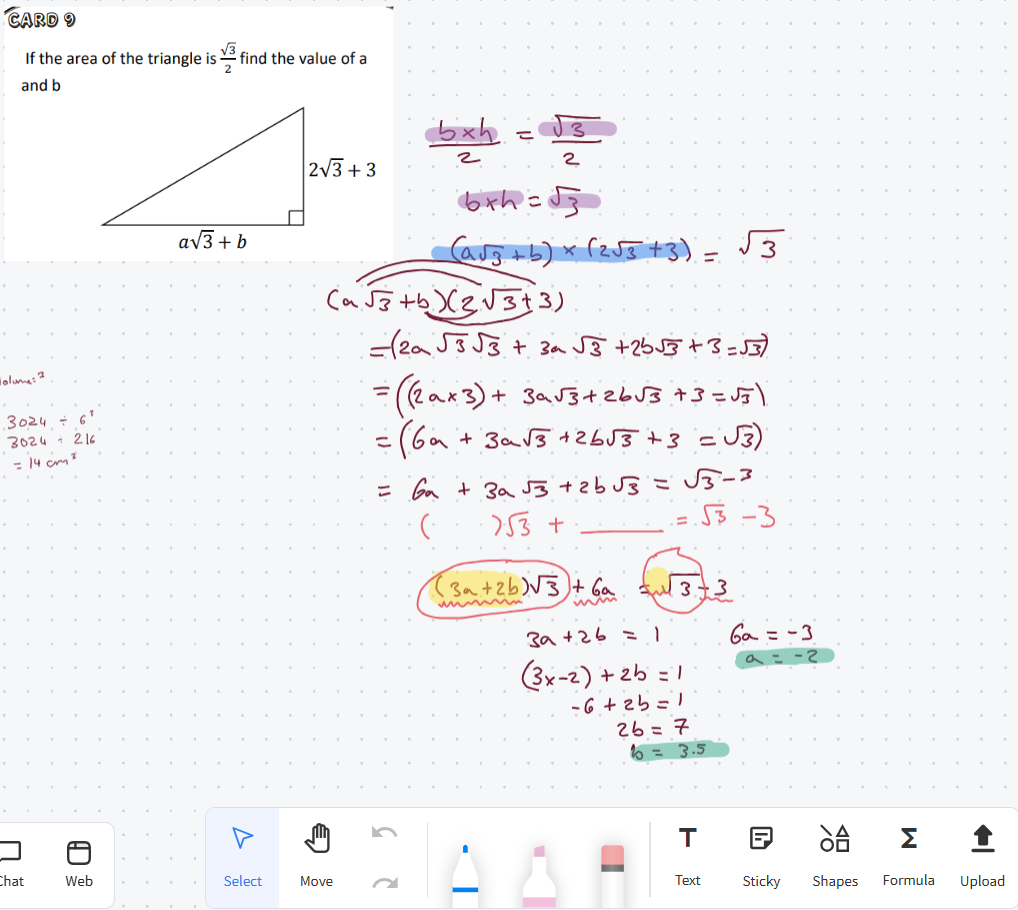
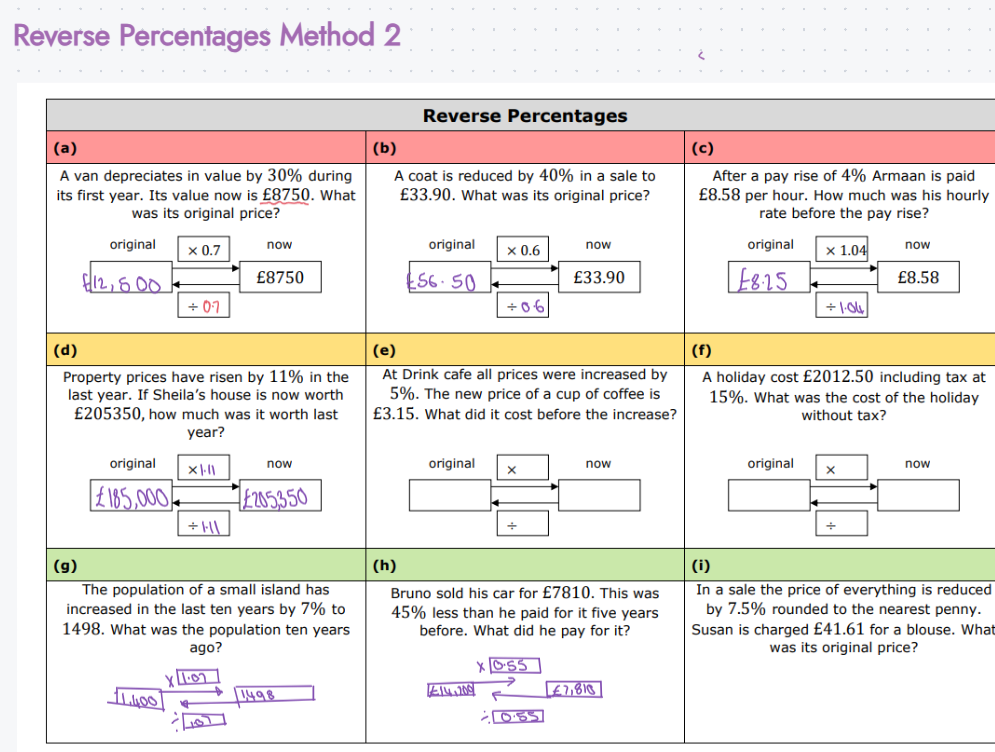
An hour taught live on a shared interactive whiteboard, so I see your child's working as they do it rather than just the final answer. Very interactive, not sitting and listening.
At the end of every textbook exercise sit the hardest questions that rarely get done properly. We do them, at the time, in full. Most exam questions are pitched at exactly that level, not the easy questions at the start of the exercise.
Two to three exam questions a week, marked by me personally with video, audio or written feedback, whichever suits the work. Not just a mark scheme to tell them what they have got wrong and why.
Honest self-checking is a skill in itself, and it is the one most Year 12s never learn. They send me a short written reflection on how it went, and I read every one.
Five students is enough that they can bounce ideas off each other, and few enough that they still get individual attention from me every week.
I keep a running record of what each student has covered, so sessions work on topics everyone has already met at school rather than running on a separate track.
If your child is already flying and wants olympiad-style problems or work beyond the specification, or they are only interested in getting an A*, this is not the right group. The work here is the A Level course, taught to the top of its difficulty, which is a different thing.
This is a foundation, not a rescue service. If your child has already fallen a long way behind, the Year 12 Recovery Course or one to one lessons will do more for them. We can discuss this once you get in touch.
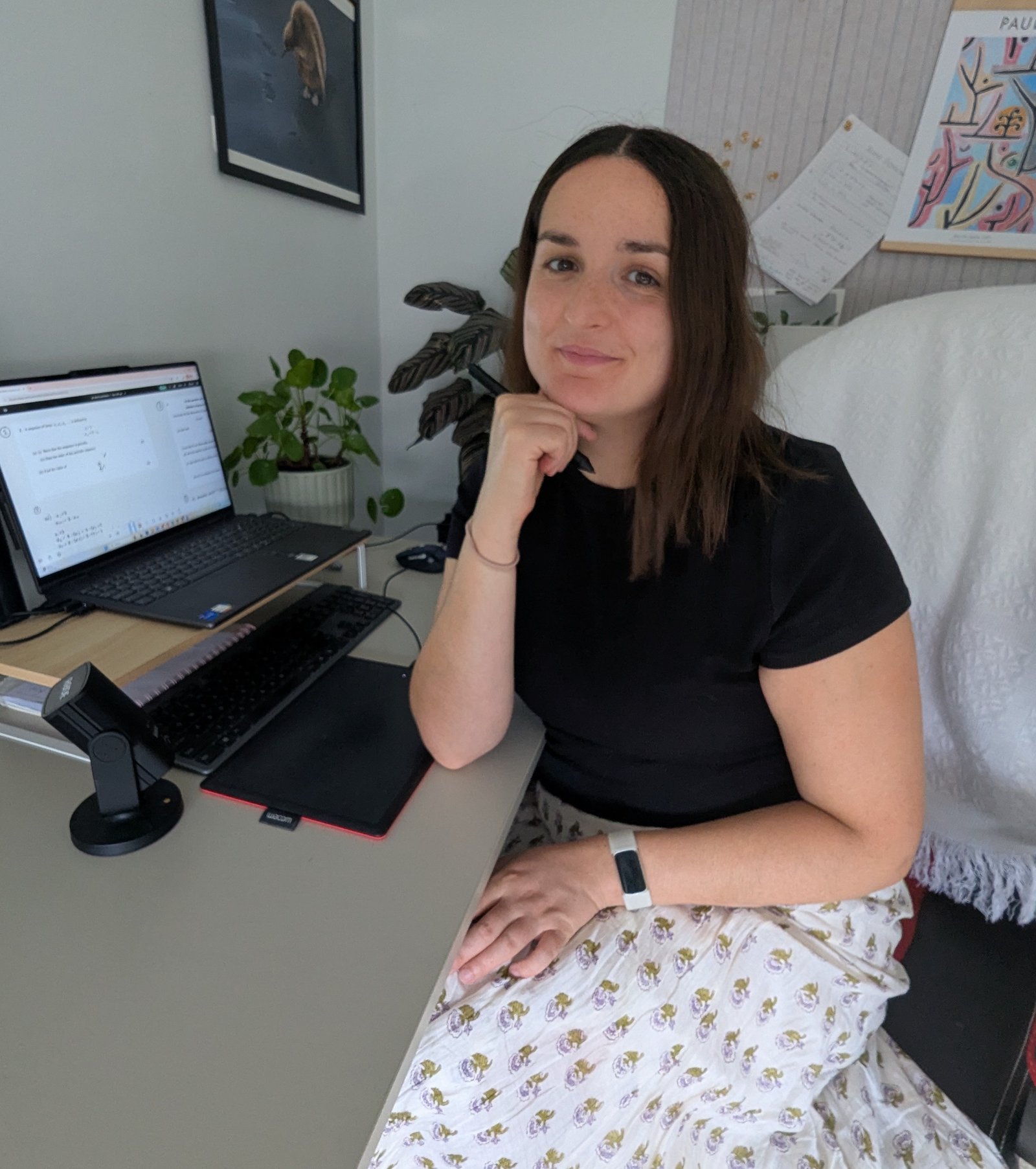
Amy
Qualified Teacher • 12 Years in the Classroom
I have spent years picking up Year 13 students in a panic, and the story is nearly always the same. Year 12 went fine, or seemed to at the start, and suddenly their Year 12 mocks were very disappointing, and they were starting Year 13 with a mountain of Year 12 catch up to do.
By then you are rebuilding a whole year of maths in the middle of the hardest year of the course. It is much better to do it properly the first time.
Almost every student starts Year 12 (Lower Sixth) maths feeling confident. The opening chapters are manageable, often easier than they expected, and that is exactly the trap. They get comfortable quickly: do the homework, nothing more, no going back over anything.
The easy start is the downfall.
The complacency shows up in a specific place. At the end of every textbook exercise sit the hardest questions, and they rarely get done properly. Half attempted, answers alongside, no honest self-checking. Students later complain that the textbook did not prepare them for the exam, but most exam questions are pitched at exactly the level of those final questions. A student who genuinely masters them is a long way towards understanding how difficult questions are built.
Then there is the cliff. Year 13 is significantly harder than Year 12, which makes Year 12 more important, not less. Students need to walk into Year 13 with the Year 12 content secure, so that all of their headspace goes on the new material. The ones who drifted through Year 12 spend Year 13 keeping their head above water, relearning things they never learned in depth, right when the course demands the most of them.
The last failure mode is past papers. When revision finally feels urgent there is no time to revisit every chapter properly, so students cram papers back to back instead. But past papers only sample the course, and doing paper after paper without going back to the concepts in between is not revision. Glancing at a mark scheme and thinking "that makes sense" is not the same as understanding.
This group runs the whole year the other way round from the way it usually goes.
Every student finds out from their teacher the order their school is teaching the course, and shares it with me. This is a requirement of joining. I keep a running record of what each student has covered, so the group stays relevant to their week at school instead of running on a separate track.
Before I sign your child up for this it would be great if we could have a conversation, on the phone, on a video call or on WhatsApp, so we can talk about their GCSE result and what they want from A Level
£250 to £400 per half term
Works out to £50 per session. A half term is 5 to 8 sessions, which is where the range comes from. Billed per half term in advance.
You, your child and me, talking about their GCSE result and what they actually want out of A Level maths. It usually takes twenty minutes and it tells me most of what I need to know.
If it looks like the right fit, your child sits a trial lesson with the group before you commit to a block. You will just pay £50 for the first lesson, and then decide if you want to commit to the whole block.
One of my core values in my tutoring practice is honesty. If I think this group is not right for your child I will tell you. Schools often do not honestly answer questions, for many reasons, but I am happy to.
Finding the start manageable is normal, nearly everyone does, and it tells you almost nothing. The students who come unstuck in Year 12 are very often the ones who found the first term comfortable and assumed it would stay that way. A weekly hour of structured teaching, plus marked exam questions with real feedback, is a modest cost next to a year of catch-up one to one lessons once the gaps have compounded.
If you want to continue beyond Year 12, we will have a conversation about what is most appropriate. That might be another group if one is running, or one to one tutoring with me or with one of my associate tutors. I have a Year 13 exam maths specialist I would happily hand a student to.
Possibly, but we talk first. A 6 makes A Level maths genuinely difficult, and it only works if your child is prepared to work hard to close the gap alongside the group.
For a student in this position, usually yes. They do not need remedial attention, they need harder work, proper marking and other students working at the same level. If your child has real gaps to close, one to one is the better route. One to one lessons are charged at £85 per session, with a marked homework every week.
An independent task your child marks themselves, with a short, written reflection, plus two to three exam questions I mark. It is designed to sit alongside school work, not compete with it, and the marking is included in the fee rather than charged on top.
They will be sent a recording of the session, and the homework goes out as usual so they do not fall out of step with the group.
Yes, if there is a place free. You are billed pro-rata for the sessions that are left.
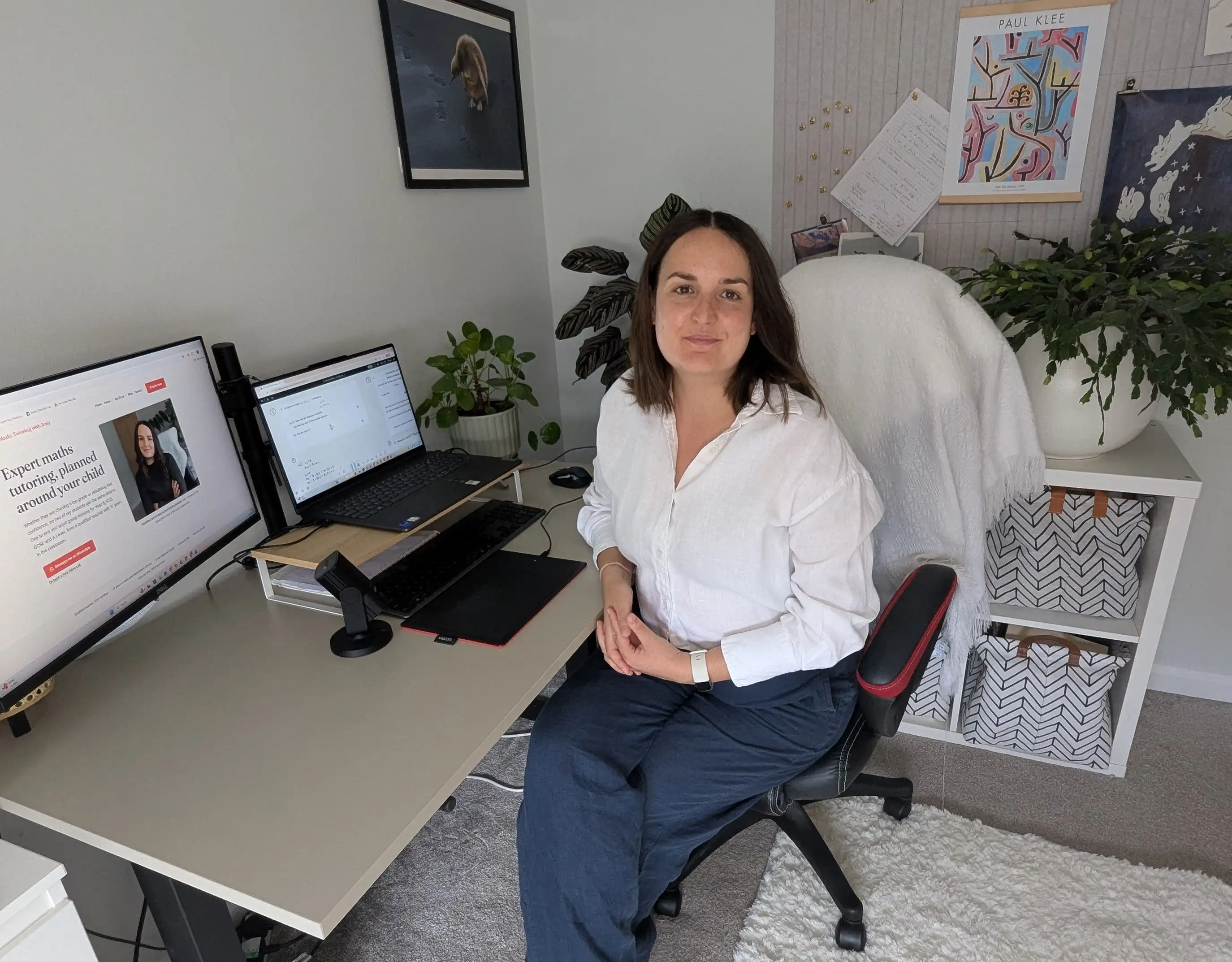
A laptop or tablet with a working microphone, and a quiet spot to sit for the hour. Lessons run on Pencil Spaces, a shared digital classroom including a video call, so your child writes on the same board I do. A cheap graphics tablet or an iPad is essential for writing on the screen.
Message me and tell me a bit about your child, their GCSE grade (or predicted) and what they want from A Level. We will work out together whether the group is right, and I will tell you honestly if it is not.
Tuesdays 6 to 7pm · Maximum 5 students · September start, but join any time